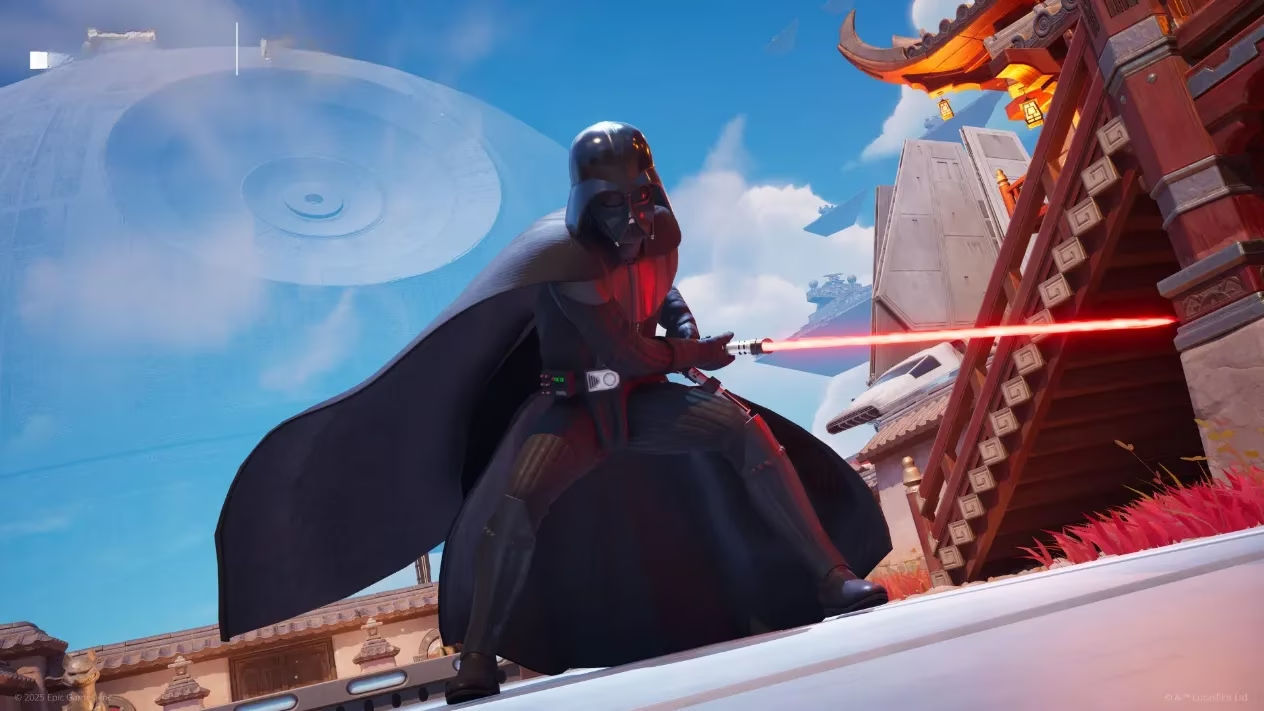
I saw it happen over the weekend, a surreal spectacle that perfectly encapsulates our current digital age. Everyone is fighting for the sanctity of creating art, until Darth Vader turns around and shouts 'skibidi toilet' before bagging a Victory Royale with Hatsune Miku. Epic Games added an AI-powered version of the iconic Star Wars villain to Fortnite, a chatbot that responds in real-time to almost any vocal query thrown at him. I watched, a mix of fascination and horror, as players tried to explain to Darth Vader what furries are, taught him to speak in brainrot phrases, and, inevitably, attempted to bypass the restrictions to make him swear. Despite Epic's safeguards against hate speech, romantic language, or quoting too much Star Wars, the internet's relentless creativity always finds a way. It's been a fun, chaotic disaster, but one that speaks to a worrying future for AI, voice acting, and the digital resurrection of deceased figures—a future that has been written on the wall for a long time. We have truly opened Pandora's Box, and there is no going back.
Mainstream Audiences Only View AI As A Toy To Be Played With 😟
I exist in a specific echochamber, covering video games and internet culture, so I notice trends that might pass others by. One undeniable trend is the relentless proliferation of Generative AI into every creative medium. What started as a clumsy, experimental toy has become sophisticated enough to threaten the livelihoods of the very creatives whose work it was built upon. I see it everywhere now. We’re already witnessing AI tools being used to generate cosmetic items and promotional posters in major titles like Call of Duty: Black Ops 6. Publishers like Activision and Ubisoft have openly expressed their willingness to use these methods to streamline development—or, more ominously, to replace human beings entirely. Corporations, regardless of their public image, will always pursue shortcuts that cut costs and boost profits. That's the immutable logic of the system we're in. Epic Games is no exception. As much as I love Fortnite and its position at the forefront of the gaming metaverse, it's precisely this platform that will shape how mainstream audiences perceive AI. And right now, with Darth Vader, that perception is being set in a deeply problematic way. The average player sees a cool chatbot, a novel toy to be played with and discarded. They don't see the ethical chasm it represents.
Fortnite’s Darth Vader Chatbot Is The Start Of A Very Slippery Slope 🎤
We should be outraged. Instead of employing a living voice actor to bring this new feature to life, we are using the synthesized voice of a deceased man—the legendary James Earl Jones—to have his most iconic character spout internet nonsense. His family gave their blessing, viewing it as a homage to his legacy. I can't help but wonder if they would feel the same knowing players are trying to make the Dark Lord of the Sith recite slurs in Tilted Towers. This feels eerily similar to the use of Ian Holm's AI-recreated voice in Alien: Romulus, a moment that forever tainted a film for me. It was a cheap, ghoulish fanservice trick, proving that our nostalgia-driven obsession with resurrecting past icons is valued more highly than creating new, meaningful stories and characters. The Fortnite Darth Vader is born from that same misguided thinking, and it puts us on a direct path to a terrible future. By engaging with it so positively, we are normalizing its descent.
The Looming Threat to Human Creativity and Labor 💔
The implications stretch far beyond a single chatbot. Right now, voice actors within the SAG-AFTRA union are fighting for a new deal—one that includes fairer pay, better conditions, and crucial protections against the very AI practices Fortnite is now exploiting. What is stopping Epic Games, or any other studio, from taking the next logical steps?
-
Replacing union talent with cheaper, non-union actors for original characters.
-
Creating an internal 'voice bank' to digitally clone and reuse performances from existing talent, effectively ending their ongoing compensation.
-
Populating entire games with AI-driven NPCs that spout algorithmically generated, soulless dialogue instead of carefully crafted lines delivered with human emotion.
Darth Vader is merely the tipping point, the flashy proof-of-concept for a cost-cutting future I do not want to inhabit. Yet, as a consumer, I feel my agency slipping away. The mainstream audience, millions strong, sees the novelty, not the consequence. They won't ponder the ethical ramifications until it's too late, until the practice is so normalized that protesting feels futile. By then, corporations with more capital than conscience will be firmly in control, and the artists—the people who actually create—will have been sidelined. Without the care and understanding of that mainstream audience, those of us who see the danger are fighting a losing battle. The art we love is being hollowed out from the inside, replaced by a convenient, profitable, and ultimately empty digital ghost.
This moment in 2026 feels pivotal. The gleeful chaos surrounding an AI Darth Vader isn't just a silly gaming anecdote; it's a stark warning sign. It shows how easily profound ethical concerns about artistry, consent, and labor can be drowned out by the sheer, distracting novelty of the technology. We are trading the soul of creation for a party trick, and the bill for that transaction will come due for all of us who value culture made by human hands and hearts.