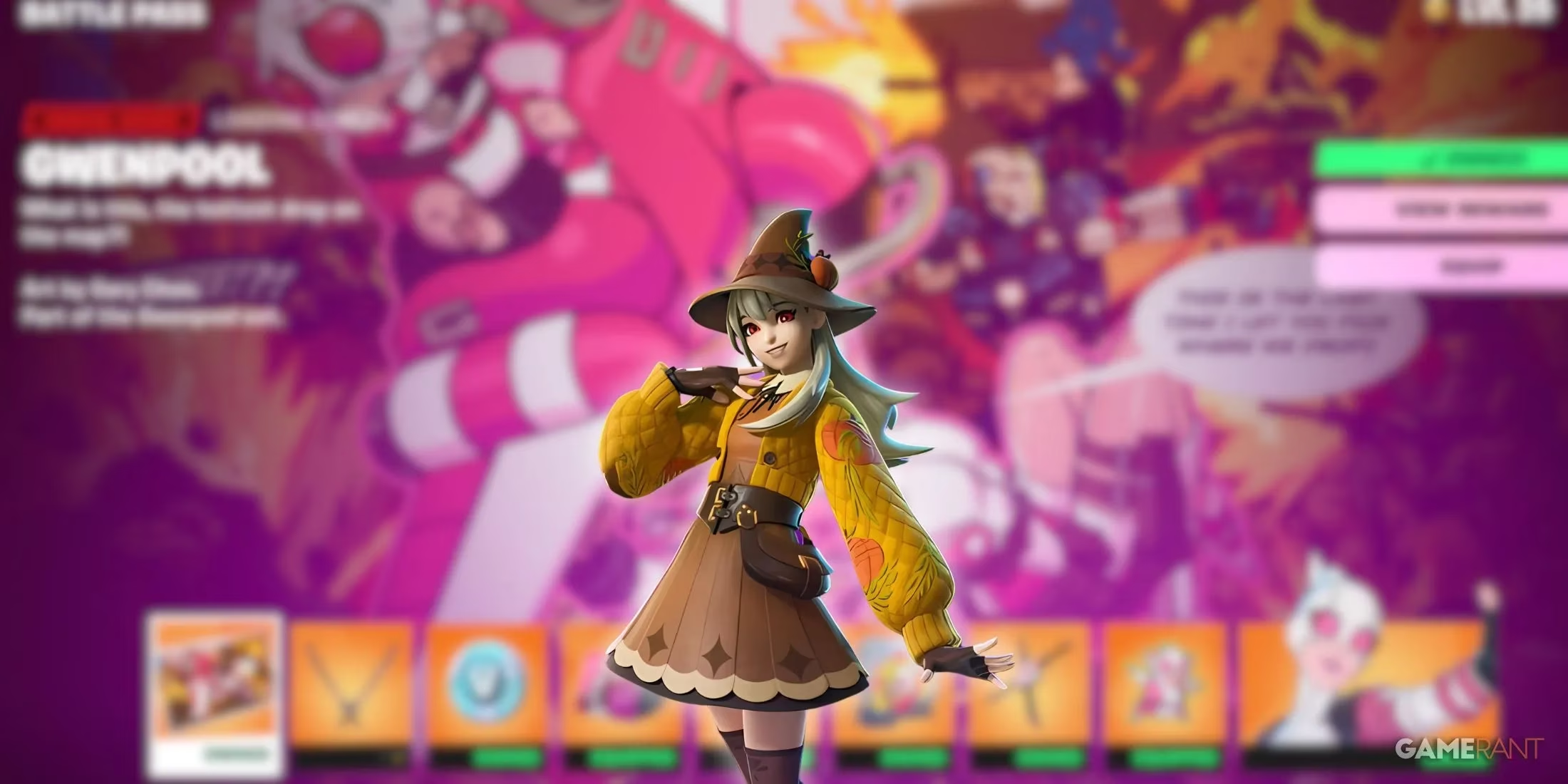
Once upon a time, grinding through Fortnite's different game modes felt like a part-time job. Players needed to juggle Battle Royale dailies, Festival quests, LEGO Fortnite objectives, and Rocket Racing challenges just to keep up with multiple passes. That all changed in late 2024, and by now—2026, the new system has simply become the way Fortnite works. Looking back, the overhaul was one of the smartest quality-of-life moves Epic Games ever made.
The transformation began quietly. In October 2024, the official Fortnite account announced that all passes would start progressing together. The idea was simple but revolutionary: earn XP in any experience, and every active pass gets the same benefit. Whether someone dropped into a sweaty Zero Build match, noodled around with friends in a Fall Guys creative island, or spent an evening building a castle in LEGO Fortnite, every minute contributed to everything at once. It sounded almost too good to be true, but it turned out to be exactly what the community had been begging for.
Before the switch, cross-progression was a mess. Fortnite Festival and LEGO Fortnite granted XP that only helped the Battle Royale pass, but playing Battle Royale itself gave zero rewards for the Music or LEGO tracks. Instead, those passes demanded their own bespoke currencies—Festival Points and Studs. Players had to chase mode-specific quests to unlock cosmetics they wanted. It was exhausting, and many simply ignored entire game modes because the hassle wasn't worth it. The player base was vocal about this frustration, arguing that nobody had time to grind three separate reward tracks every day.
Epic listened. The conversion to a universal XP system wiped away all those friction points. Festival Points, Studs, and even the beloved Battle Stars became relics of the past. In their place, XP turned into the one true currency. Every pass—Battle Royale, Music, LEGO—now follows a single unified track model with free and premium reward lanes. A player can hop into Save the World to farm some husks, then queue for a Team Rumble match, and watch their Music Pass level up alongside everything else. It’s seamless, and it made Fortnite feel like a cohesive ecosystem rather than a cluster of disconnected islands.
The impact on player behavior was immediate and lasting. Before the change, many players stuck rigidly to one or two modes, afraid that branching out would waste time. Now, the opposite is true. Because all paths lead to the same rewards, experimenting with different experiences feels encouraged and worthwhile. Creative map makers saw a surge in traffic as players discovered that some custom deathrun or parkour map could grant big XP boosts under the daily cap of 200,000. Epic’s permanent modes also benefited: Rocket Racing, which once struggled to hold a consistent audience, saw a renaissance thanks to drivers knowing their laps contributed to their main Battle Royale pass. The music stage of the Festival became a favorite warm-up activity.
For Fortnite Crew subscribers, the overhaul came with an extra layer of delight. Rumors had swirled in 2024 that the developers were investigating a way for Crew members to access all premium passes simultaneously. That feature eventually rolled out, and by 2026 it's become a standard perk. Subscribers unlock the premium rewards for every active pass automatically, no extra purchase needed. Combined with the unified XP system, this turned the Crew subscription from a nice-to-have into a must-have for dedicated players. The value proposition is simply unmatched, and many consider it the best gaming subscription on the market right now.
It’s worth noting how the change also simplified the marketing and design of passes. New passes—whether a seasonal Music Pass or a themed LEGO Pass—now launch with a single track that’s easy to understand at a glance. No more spreadsheets to calculate how many Studs are needed for that final building kit. No more frantic last-minute quest completions because Festival Points were lagging behind. The auto-claim feature, introduced alongside the overhaul, means rewards unlock automatically as levels are reached, so nobody misses out because they forgot to click something. It’s a small touch, but it cuts down on the kind of micromanagement that used to make progression feel like a chore.
When Chapter 6 arrived on December 1, 2024, it didn’t just bring a new island and loot pool—it finalized the battle pass evolution. Players who had been around since the OG Chapter 2 days felt a sense of closure, as the game finally aligned its progression with how people actually play. Two years later, the unified system has proven its staying power. No major revert or tweak has been necessary, because the core philosophy is so robust. Epic continues to release new modes—like the recently added open-world exploration mode—and they all plug into the same XP pipeline without forcing extra quest lists on players.
Looking at the current state of Fortnite in 2026, it’s hard to imagine going back. The days of segregated pass grinds feel like a distant memory. Players freely mix and match activities based purely on fun, not on which cosmetic they’re desperate to unlock. XP scrolls, creative accolades, and milestone bonuses all feed the same meter, and every reward feels earned rather than scheduled. The community has responded by creating guides on the most efficient XP maps, but even casual players can comfortably complete every pass by just playing what they enjoy. That kind of player-first design is a lesson many live-service games could stand to learn.
So if someone new drops into Fortnite today and sees their LEGO builds advancing their Festival track, they might take it for granted. But veterans remember the grind. They remember the Studs, the Festival Points, the way the old system would make you choose between having a life and having that one last skin. The battle pass unification didn’t just change Fortnite—it respected its players’ time. And in 2026, that respect is still paying off, one XP tick at a time.