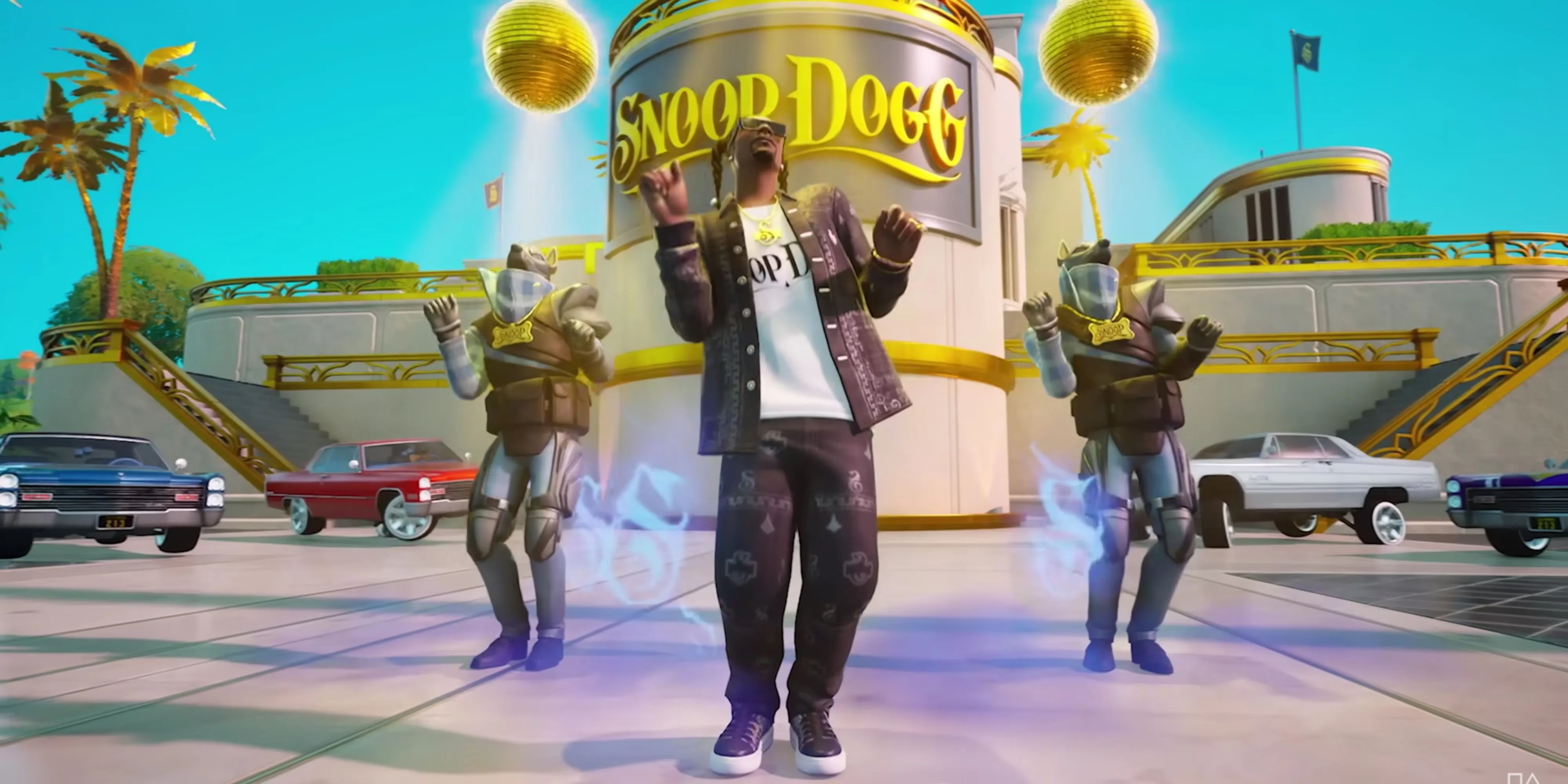
Time has a wicked sense of humor. Back in 2024, when Epic Games teleported Snoop Dogg onto the island as the headline act of Chapter 2 Remix, the hype was deafening. There he stood, digital blunt in hand, flanked by Ice Spice and Juice WRLD, as a live Times Square crowd vibrated in sync with the metaverse. It was supposed to be a celebration of music, a nostalgia bomb wrapped in a battle royale. Two years later, as we cruise through 2026, the party hasn’t stopped — but one particular move has aged like a spring-loaded mousetrap in a daycare. The Snoop Dogg Walk emote is now Fortnite’s most unintentional social experiment, turning millions of harmless gamers into unwitting walking liabilities.
For those who spent the last 24 months living under a palm tree in LEGO Fortnite, the Snoop Dogg Walk is that swaggering, shoulder-dipping strut the D-O-Double-G imported from decades of hip-hop history. It looks cool. It feels smooth. It earned its own cosmetic slot faster than you can say “crank 90s.” But peel back the pixels, and you’ll find a DNA strand that runs straight through South Central Los Angeles. The emote isn’t just a dance — it’s a sanitized snippet of the Crip Walk, a movement born from gang culture with a resume far heavier than any lobby full of defaults. And that’s where the trouble begins, like giving a toddler a flamethrower disguised as a bubble wand.
Historically, the C-Walk was a calling card. Crips used it to spell out their affiliation or to mock rivals, sometimes as a sort of grim postscript after an altercation. MTV once decided it was too radioactive for mainstream eyeballs and banned music videos featuring the walk — including Snoop’s own Drop It Like It’s Hot. Fast forward to 2026, and that same motion has been shrink-wrapped into a V-Bucks purchase, available to just about anyone with thumbs and Wi-Fi. The transformation is so seamless it’s almost metaphorical: imagine taking a centuries-old military saber technique and turning it into a TikTok handshake. Context evaporates; weaponized movement becomes daycare choreography.
When the Remix season dropped, a few historically aware players immediately raised an eyebrow on social forums (the ashes of Twitter, now called X, were ablaze). Their concern wasn’t about cultural appropriation debates, which have mellowed into a dull hum over the years; it was about geography. The Snoop Dogg Walk is a meme-magnet in virtual space, but perform it on the wrong sidewalk — say, in a neighborhood where blue flags carry mortal weight — and you might not get a chance to explain you thought it was just a victory dance from a video game. It’s not that every corner of America is a gangland pressure cooker, but the map of street politics hasn’t been redrawn simply because the metaverse exists. One veteran commenter put it bluntly: “If a Blood sees you crip walking in his territory, he won’t check your battle pass level before reacting.”
Of course, a counter-chorus insisted the fear was overblown. They argued that in 2024 — and now, even more so in 2026 — the move had been so thoroughly bleached by pop culture that only the most fossilized gatekeepers would still see it as a threat. And they have a point; Fortnite alone has broadcast the dance to hundreds of millions of eyeballs. The Walk now lives in the same mental drawer as flossing and Orange Justice, recognizable even to grandparents who’ve never touched a controller. Yet the concern hasn’t entirely evaporated. It’s more like background radiation: low-level, but not zero. Because the game’s post-elimination habit — drop an emote right on the spot where you sent someone back to the lobby — adds an extra layer of dark irony. You kill a player, then you Crip Walk on their loot. Even Snoop, a man who has spent decades weaving street symbolism into commercial gold, might wince at the juxtaposition.
What’s genuinely fascinating from our 2026 vantage point is watching the aftermath of this cultural catalyst. Schoolyards have become impromptu sociological labs. I’ve heard of actual school staff pausing lunchtime monitors to gently explain to a nine-year-old that the “cool Fortnite dance” might ruffle feathers if done at a family gathering in certain zip codes. Meanwhile, YouTube is stuffed with “Snoop Walk gone wrong” prank videos that are equal parts cringe and cautionary tale. The emote has become a litmus test for geographical awareness: those who understand why you shouldn’t do it are the ones who never even bought it.
Epic Games, for its part, hasn’t publicly addressed the tension. Why would they? The emote sells. Snoop Dogg appears in new Icon Series skins with alarming regularity. The machinery of engagement churns on. But the Snoop Dogg Walk remains a masterclass in how digital platforms can flatten complex history into a two-second loop, then hand it to a global audience that may not know the difference between a silly strut and a gang affidavit. Perhaps the real lesson is that Fortnite has become the ultimate parallel universe: a place where you can wield gravity hammers, wear anime skins, and borrow dance moves born from generational pain, all in the same match. And if you ever feel tempted to replicate that walk at the bus stop, just remember — the respawn button doesn’t exist in real life.